How to Pitch Brands With AI and Land Sponsorships
Use AI to pitch brands, build a media kit and land sponsorships as a small creator: research, pitch templates, pricing, contracts and follow-ups that work.
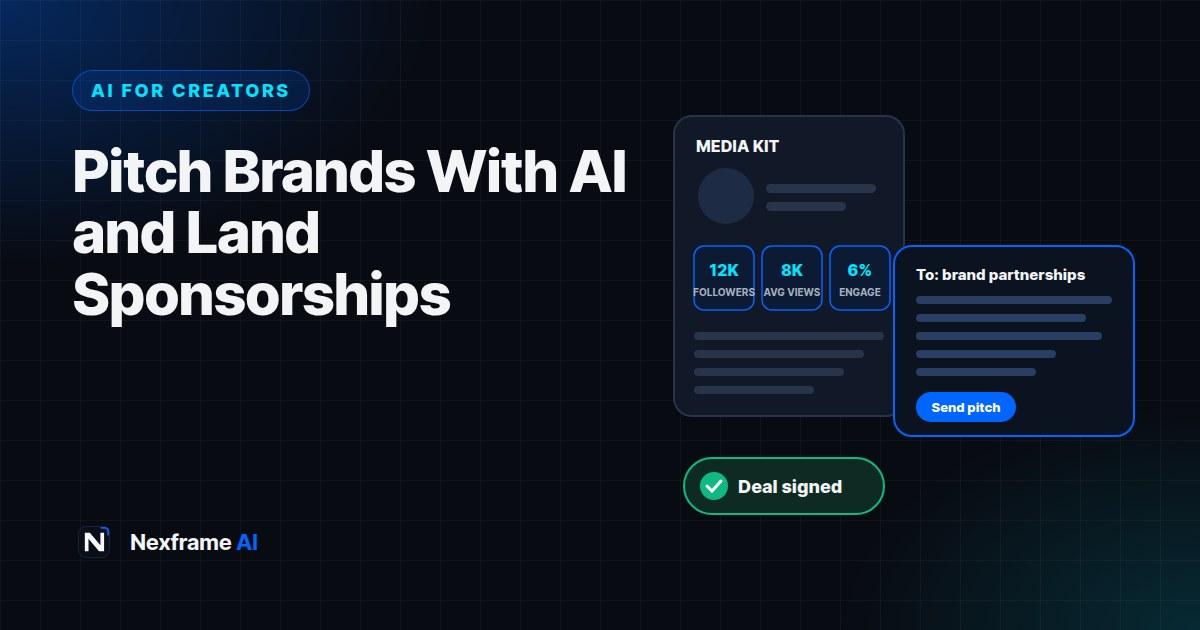
Most creators wait for brands to find them. They post consistently, grow slowly and hope that one day an email arrives with an offer. For a lucky few, it does. For most small and mid-sized creators, it never comes, not because their content isn't good enough, but because brands are busy and simply don't know they exist.
The creators who land steady sponsorships usually do something different: they pitch. They research brands that fit their audience, send short, specific emails and follow up professionally. AI makes every part of that faster, from finding the right brands to drafting pitches, building a media kit and preparing for negotiations.
This guide shows you how to pitch brands with AI and land sponsorships, even with a modest following. You'll learn what brands look for, how to build a media kit, how to find the right contacts, pitch templates that get replies, how to price your work and how to protect yourself with clear agreements.
What Brands Actually Look For
Big follower numbers help, but they're not what most brands are really buying. They want:
The right audience. A creator with 8,000 engaged followers who are all university students in Lagos can be more valuable to a student-focused brand than a creator with 200,000 random followers.
Engagement. Comments, shares and saves show that people actually care about your content.
Trust. Brands want creators whose audiences believe their recommendations.
Professionalism. Clear communication, meeting deadlines and following the brief matter enormously, especially for repeat deals.
Content quality. Good lighting, clear audio and a consistent style show you'll represent them well.
This is good news for small creators. If you have a clear niche and an engaged audience, you have something brands want.
Step 1: Build a Simple Media Kit
A media kit is a one or two page document that tells brands who you are, who your audience is and what you offer. It's your creator CV.
Include:
A short bio: who you are and what your content is about, in two or three sentences.
Your platforms and numbers: followers, average views and engagement rate for each platform.
Audience details: age range, gender split, top locations and interests, taken from your platform analytics.
Content examples: links to three to five of your best posts.
Past collaborations: brands you've worked with and any results, if you have them.
What you offer: for example, dedicated videos, mentions, story sets or usage rights.
Contact details: a professional email address.
AI can help you write a sharp bio and organise your stats. Try:
I'm a creator who makes [type of content] for [audience] on [platforms]. Here are my stats:
[paste followers, average views, engagement, top audience locations and ages]. Write a
confident, honest 3-sentence bio for my media kit and a short "Why work with me" section
with 3 points based only on these facts.
Design the kit in a tool like Canva using a simple template that matches your brand colours. Save it as a PDF and keep it updated monthly.
Step 2: Find Brands That Fit
The best pitches go to brands your audience already uses or would genuinely benefit from. Start with:
Brands you already use and like. Your recommendation will be honest, and that shows.
Brands similar creators work with. Look at sponsored posts from creators in your niche. If a brand sponsors one, it might sponsor others.
Brands advertising to your audience. The ads you see on Instagram and TikTok are clues to who's spending money on your audience.
Local and growing businesses. Fintechs, edtech platforms, fashion brands, food businesses and apps often have smaller budgets but are more open to working with small creators.
Use AI to brainstorm and organise your list:
I make content about [niche] for [audience, location]. Suggest 25 types of brands and
specific well-known companies in [country] that would benefit from reaching this audience.
Group them by category and say why each fits. I'll verify each one myself.
Then check each brand yourself. Visit their website and social pages, look at whether they already work with creators, and note anything relevant, such as a new product launch.
Step 3: Find the Right Contact
Pitches sent to general inboxes often disappear. Try to reach the person responsible for influencer marketing, brand partnerships, social media or marketing.
Look for:
A partnerships or press email on the brand's website
Marketing or partnerships staff on LinkedIn
Creator programmes or application forms on the brand's site
Agencies that manage the brand's influencer campaigns
If you can't find a specific person, a short message to the brand's official social account asking for the right contact is fine.
Step 4: Write a Pitch That Gets Replies
The best pitches are short, specific and about the brand, not you. Aim for under 150 words.
A good pitch includes:
A personal opening that shows you know the brand.
Who you are and who your audience is, in one or two sentences, with a key number.
A specific idea for how you'd feature them.
Proof, such as a link to a similar post or a strong result.
A clear, easy next step.
Here's an example:
Subject: Video idea for [Brand]'s student account launch
Hi Amaka,
I saw [Brand] just launched student accounts, and I think my audience would love it. I make finance tips for Nigerian university students on TikTok and Instagram, with around 12,000 followers and an average of 8,000 views per video, mostly students aged 18 to 24.
I'd love to make a short video showing how I use [Brand] to manage my monthly allowance, in the same style as this budgeting video that reached 45,000 people: [link].
I've attached my media kit. Would you be open to a quick chat this week?
Thanks, Tolu
Use AI to draft personalised versions for each brand, then edit them so they sound like you:
Write a brand pitch email under 150 words. Brand: [name and what they've recently launched].
Me: [niche, audience, key stats]. Idea: [your content idea]. Proof: [link and result].
Tone: friendly and professional. Include a specific subject line. Don't exaggerate my numbers.
Never send the same generic pitch to dozens of brands. Personalisation is what gets replies.
Step 5: Follow Up Professionally
Brands are busy. No reply doesn't always mean no. Send one polite follow-up five to seven business days later:
Hi Amaka, just following up on my note about a student budgeting video for [Brand]. Happy to adjust the idea to fit your plans. Let me know if there's a better person to speak to.
If there's still no reply, move on and try again in a few months with a new idea.
Keep a simple tracker of every brand you pitch: brand, contact, date pitched, follow-up date and status. The tracking methods in our Business Workflows work well for this.
Step 6: Price Your Work
Pricing is where many creators undersell themselves. There's no single correct rate, but these factors matter:
Deliverables: one TikTok, a set of stories, a YouTube integration or a full campaign.
Your reach and engagement: average views matter more than followers.
Usage rights: if the brand wants to use your video in its own ads, charge extra.
Exclusivity: if you can't work with competitors for a period, charge extra.
Production effort: scripting, filming, editing and revisions take time.
Ask the brand about their budget first. If they ask you to name a price, give a range based on your deliverables. AI can help you prepare:
I'm a creator with [stats]. A brand wants [deliverables, usage rights, timeline]. Help me
list all the work involved, the factors that should increase my price, and three questions
to ask the brand before I quote. Don't invent market rates.
If you're early in your journey, a paid deal at a fair rate builds your portfolio. Be cautious about working only for free products, unless the product is genuinely valuable to you and the brand is a strong portfolio name.
Step 7: Agree the Terms in Writing
Even small deals need clear written terms. An email confirming the details is better than nothing; a simple contract is better still. Agree on:
Deliverables: exactly what you'll post, where and how many.
Timeline: draft dates, posting dates and approval steps.
Payment: amount, currency, when you'll be paid and how. Ask for part payment upfront for new brands.
Revisions: how many rounds are included.
Usage rights: whether and how long the brand can reuse your content.
Exclusivity: any competitors you can't work with, and for how long.
Disclosure: how you'll label the content as sponsored.
AI can help you summarise a contract in plain English and flag points to ask about, but it's not a lawyer. For large deals, get professional advice.
Disclose Sponsored Content
Audiences and platforms expect honesty. Use each platform's paid partnership tools, such as TikTok's branded content setting and YouTube's paid promotion option, and make it clear in the content or caption that it's sponsored. Disclosure protects your trust with your audience, and hiding it can break platform rules and advertising regulations.
Delivering Well So Brands Come Back
The easiest deal to land is a repeat deal. Brands rebook creators who make their lives easy.
Meet every deadline. If something goes wrong, tell them early.
Follow the brief, then add your voice. Brands hire you because your audience trusts your style.
Send a results report. After the campaign, share views, engagement, clicks and comments. A short, honest summary makes rebooking easy.
Thank them and suggest a next idea. A new idea at the end of a successful campaign often becomes the next deal.
Common Mistakes to Avoid
Generic copy-and-paste pitches. Brands can tell, and they ignore them.
Pitching brands your audience doesn't care about. It wastes everyone's time and can hurt trust.
Exaggerating your numbers. Brands can check, and they will.
Agreeing to deals without written terms. Unclear deals lead to unpaid invoices and endless revisions.
Forgetting usage rights. Letting a brand run your video as an ad for free undervalues your work.
Not disclosing sponsorships. It damages trust and can break the rules.
Build Proof Before Brands Say Yes
If you've never had a sponsorship, brands may hesitate. You can build proof in a few ways.
Make unpaid reviews of products you already use. Post honest content about brands your audience cares about, without being paid. It shows brands what working with you would look like. Don't pretend it's sponsored.
Create a sample sponsored video. Make a polished example integration for a brand you'd love to work with, and include it in your media kit as a concept piece. Label it clearly as a sample, not a real campaign.
Work with local businesses. Small restaurants, salons, shops and start-ups often welcome a creator who can bring customers. Offer a small paid package or a fair trade, and track results like orders or sign-ups.
Collect results and testimonials. After every collaboration, ask for a short quote and record your numbers. Two or three real results make your next pitch far stronger.
Join creator programmes. Some brands and platforms run creator or affiliate programmes that are easier to join than direct sponsorships. Affiliate links also show brands how many sales you can drive.
Treat your creator work like a business from day one: a separate email, organised records and clear invoices. It's the same professionalism you'd bring to a job application, and tools like Nexframe Resume can help you present your creator experience on a CV if you apply for marketing or social media roles.
Final Thoughts
You don't need a huge following to land sponsorships. You need a clear niche, an engaged audience and the habit of pitching brands that fit. AI makes the work faster at every step, from research and media kits to pitches and contract checks.
Build your media kit this week, list 20 brands that fit your audience, and send five personalised pitches. Track every one, follow up once, and deliver brilliantly when you land a deal.
If you're still building the audience brands want, start with our guide to making faceless videos with AI. And for more ways to earn with AI skills, see our list of no-code AI services you can sell this month.
Frequently Asked Questions
How many followers do I need to get sponsorships?
There's no fixed number. Many brands work with small creators who have a clear niche and an engaged audience. Engagement and audience fit often matter more than follower count.
Can AI write my brand pitches?
AI can draft personalised pitches quickly, but edit every one so it sounds like you and contains accurate numbers. Generic AI pitches are easy to spot.
What should a media kit include?
A short bio, platform stats, audience details, examples of your best content, past collaborations, what you offer and your contact details. Keep it to one or two pages.
How much should I charge a brand?
It depends on your deliverables, reach, engagement, usage rights, exclusivity and production effort. Ask the brand's budget first, then quote a range based on the work involved.
Should I work for free products?
Occasionally, if the product is valuable to you and the brand strengthens your portfolio. Don't make it your default, because it undervalues your work.
How do I find a brand's contact person?
Check the brand's website for partnership emails or creator programmes, look for marketing or partnerships staff on LinkedIn, or ask the brand's official social account for the right contact.
Do I have to label sponsored posts?
Yes. Use each platform's paid partnership tools and make sponsorships clear in your content or caption. It protects your audience's trust and keeps you within platform rules.
What if a brand doesn't reply?
Send one polite follow-up after five to seven business days. If there's still no reply, move on and try again later with a new idea.
Comments (0)
Sign in to post a comment.
- Be the first to comment.