AI Product Descriptions That Sell: A Guide for Shops
Write AI product descriptions that sell for your online store, Instagram shop or marketplace: prompts, structure, photos, SEO basics and mistakes to avoid.
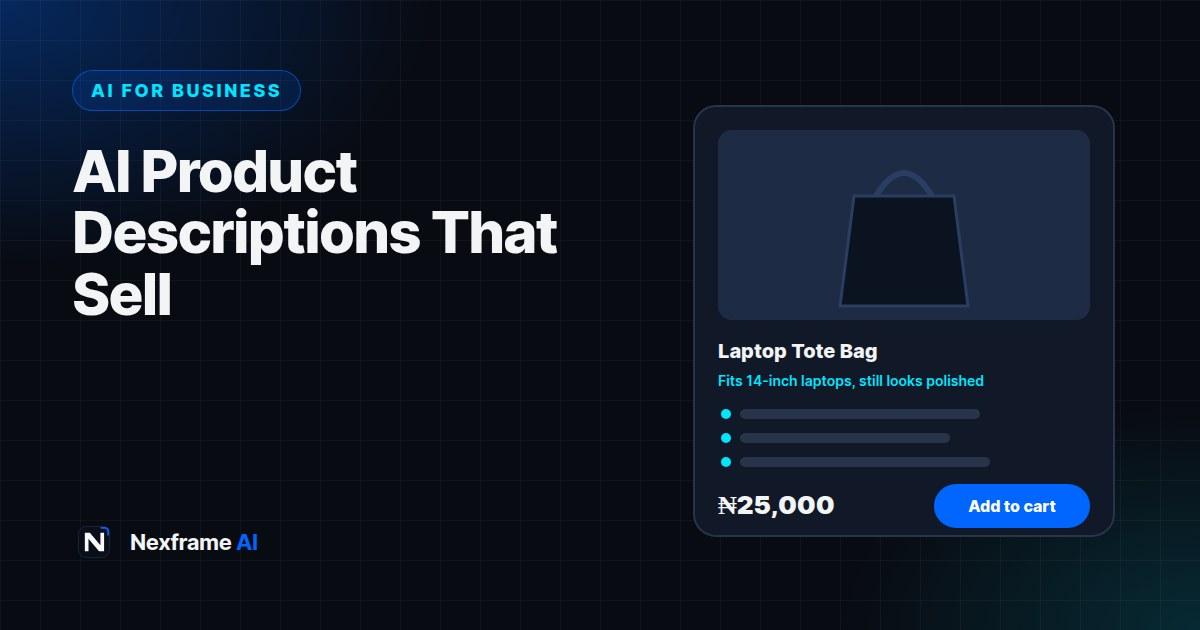
Scroll through most small online shops and you'll see the same thing: a good photo, a price and a description that says "Quality product. Available in all sizes. DM to order." Then the owner wonders why people message to ask questions instead of buying.
Product descriptions do more work than most sellers realise. They answer questions before customers ask, reassure hesitant buyers, help your products show up in search and give customers a reason to choose you over the seller with the same item at a similar price.
Writing good descriptions for dozens or hundreds of products used to take days. AI can now draft them in minutes. But copy-and-paste AI descriptions often sound generic, include made-up details or read like every other shop's. This guide shows you how to write AI product descriptions that actually sell: what to include, how to give AI the right information, prompts for different platforms, how to keep your brand voice and the mistakes to avoid.
What a Good Product Description Does
A strong product description:
Answers the customer's real questions. Size, material, colours, what's included, how to use it, delivery and returns.
Leads with benefits, backed by features. "Keeps drinks cold for 24 hours" is a benefit. "Double-walled stainless steel" is the feature that explains why.
Speaks to the right buyer. A description for busy mums sounds different from one for university students or corporate gift buyers.
Builds trust. Clear, specific details and honest information make people more comfortable buying from a small seller.
Helps people find you. On your website and marketplaces, the words in your title and description help your products appear when people search.
The Information AI Needs From You
The biggest reason AI descriptions sound generic is that the AI only gets the product name. Give it real details and the output improves dramatically.
For each product, gather:
Product name and type
Key features: materials, size, weight, capacity, ingredients, colours and what's in the box
Who it's for and the problem it solves
What makes yours different: quality, price, origin, craftsmanship or service
How customers use it, in real life
Common questions customers ask about it
Care or usage instructions
Delivery, returns and warranty details
The best source of this information is your own customers. Look at the questions they ask on WhatsApp and Instagram, and the words they use in reviews. Those words are often exactly what other customers are searching for.
A Simple Structure That Works
For most products, this structure keeps descriptions clear and persuasive:
Opening line: the main benefit, in one sentence.
Short paragraph: who it's for and why they'll love it.
Key features: three to six bullet points, each with a benefit.
Details: size, materials, colours, what's included.
Care or usage notes, if relevant.
Reassurance: delivery, returns or warranty, in one line.
Short products can use a shorter version. Expensive or complex products may need more detail.
Prompts for Product Descriptions
The core prompt
Write a product description for my online store.
Product: [name]
Features: [list]
Who it's for: [customer]
What makes it different: [details]
Common customer questions: [list]
Delivery and returns: [details]
Tone: [friendly and warm / premium / playful]
Structure: one benefit-led opening line, a short paragraph, 4 to 6 bullet points pairing
features with benefits, and a one-line reassurance about delivery or returns.
Use British English. Don't invent features, certifications or claims I haven't given you.
The last line matters. AI often adds believable details, such as "waterproof" or "dermatologist tested", that may not be true. False claims can lead to complaints, returns and even legal trouble.
For Instagram and WhatsApp catalogues
Social shops need shorter, punchier descriptions:
Rewrite this product description for my Instagram shop and WhatsApp catalogue. Keep it
under 300 characters, start with the main benefit, include the price of [₦ price] and
end with a clear call to action like "Tap to order" or "Send us a message".
For marketplaces
Marketplaces such as Jumia, Konga, Amazon or Etsy have their own rules for titles, bullet points and descriptions. Ask the AI to follow them:
Write a marketplace listing for [product] for [marketplace]. Give me a title under
[character limit] characters with the main search keywords first, five bullet points with
key features and benefits, and a description of about 150 words. Use keywords customers
would search for, like [examples], naturally. Don't exaggerate.
Check each marketplace's current listing guidelines, since rules change and breaking them can hide your products.
For many products at once
If you have a spreadsheet of products, you can work through them in batches. Paste 10 products at a time with their details and ask for descriptions in a consistent format. Check every one before uploading; batch work is where errors creep in.
Keep Your Brand Voice
If every description sounds like AI, your shop sounds like every other shop. Teach the AI your voice.
Write a short voice guide. Three or four sentences describing how your brand sounds, with words you use and words you avoid. For example: "Warm, confident and practical. We talk like a friend who knows fashion. We use 'you' a lot. We avoid hype words like 'amazing' and 'perfect'."
Give examples. Paste two descriptions you've written and love, and ask the AI to match their style.
Edit the first lines yourself. The opening sentence carries most of the persuasion. Make it yours.
Use your customers' words. If customers describe your bags as "the one that fits a laptop and still looks classy", use that phrase.
Before and After: A Real Difference
Before:
"Ladies handbag. Good quality. Available in black and brown. DM to order."
After:
"The work bag that actually fits your laptop and still looks polished at a dinner after.
Made from soft vegan leather with a structured shape, this tote holds a 14-inch laptop, a water bottle and everything else your day needs, without looking bulky.
Fits laptops up to 14 inches, with a padded inner pocket
Zip-top closure keeps your things secure on busy commutes
Inside pockets for phone, keys and cards, so nothing gets lost
Sturdy handles and a detachable shoulder strap for two ways to carry
Available in black and brown
Size: 38cm wide, 29cm tall, 13cm deep. Wipe clean with a damp cloth.
Delivery across Lagos in 1 to 2 days, and easy exchanges within 7 days."
The "after" version answers the questions customers usually send on WhatsApp, explains the benefits and builds trust, so more people buy without needing to message first.
Product Photos and AI
Descriptions and photos work together. AI image tools can help you:
Remove or replace messy backgrounds
Create clean, consistent backgrounds for your catalogue
Improve lighting and colour
Generate lifestyle scenes to show products in use
But be honest. Your photos must show the real product accurately. Don't use AI to make a product look better, bigger or different from what customers will receive, and avoid AI-generated images that present products you don't actually stock. Misleading photos lead to returns, complaints and bad reviews.
If you also sell with video, short product clips can lift sales on Instagram and TikTok. Our guide to making faceless videos with AI shows how to make product videos without being on camera.
SEO Basics for Product Pages
If you sell on your own website, a few simple habits help your products appear in Google search:
Use the words customers search for. For example, "laptop tote bag for women" rather than just "Ada bag". Ask AI to suggest search phrases, then choose the ones that genuinely match your product.
Write unique descriptions. Don't copy the manufacturer's description used by every other seller.
Use clear product titles with the product type and key feature.
Add alt text to images, describing what the photo shows.
Keep important details in text, not only in images, so search engines can read them.
Measure What Works
Track whether new descriptions improve results:
Conversion rate: the share of people who view a product and buy.
Questions before buying: fewer repeat questions on WhatsApp often means clearer descriptions.
Returns and complaints: these should fall if descriptions are accurate.
Search visibility: whether products appear more often in marketplace or website search.
Test one change at a time where you can, for example a new opening line on your top five products, and compare results over a few weeks. The Business Workflows include simple review routines for this.
Common Mistakes to Avoid
Giving AI only the product name. You'll get vague, generic text.
Letting AI invent features. Never publish claims you haven't confirmed.
Same voice as everyone else. Use a voice guide and edit the opening lines.
Walls of text. Use short paragraphs and bullet points so people can scan.
Missing practical details. Size, materials, delivery and returns are what customers need to decide.
Misleading AI photos. Show the real product, always.
Tips for Different Product Types
Different products need different details. Add these to your prompt depending on what you sell.
Fashion and accessories. Sizes with measurements, fit (true to size, loose or fitted), fabric, care instructions and how to style the item. Size guides reduce returns more than almost anything else.
Food and drinks. Ingredients, portion size, shelf life, storage, allergen information and how it's prepared or delivered fresh. Never let AI guess ingredients or health claims.
Beauty and skincare. Ingredients, skin or hair type it suits, how to use it and what results to expect realistically. Avoid medical or "cures" claims entirely, since they can break advertising rules.
Electronics and gadgets. Exact specifications, compatibility, what's in the box, warranty and power requirements. Customers check details closely, so accuracy matters most.
Home and furniture. Dimensions, materials, assembly, weight limits and delivery or installation details. Include a photo or note showing scale.
Handmade and artisan products. The story behind the product, who made it, the materials and why each piece may vary slightly. This is where your brand voice shines.
Services. What's included, how long it takes, what the customer needs to provide, pricing and what happens next after booking.
For each category, build one strong template prompt with your required details, then reuse it for every product in that category. It keeps your listings consistent and saves time. The free AI Prompt Improver can help you sharpen each template before you use it at scale.
Final Thoughts
AI product descriptions can save you days of writing and help you sell more, as long as you feed the AI real details, keep your brand voice and check every claim. The best descriptions answer customers' questions before they ask, lead with benefits and build trust.
Start with your top ten products. Gather the details, use the core prompt, edit the opening lines and track what changes. Then roll the approach out across your whole catalogue.
Clear product information also makes AI customer service far more accurate. Our guide to AI customer service on WhatsApp shows how to put it to work. For a steady stream of social content around your products, see our guide to creating 30 days of content in one weekend and the Content Creation Workflows.
Frequently Asked Questions
Can AI write product descriptions?
Yes. AI can draft product descriptions quickly, especially when you give it real details about features, customers and what makes your product different. Always check and edit before publishing.
How long should a product description be?
For most products, 100 to 300 words is enough. Social shop descriptions can be much shorter. Expensive or complex products may need more detail.
Will Google penalise AI-written product descriptions?
Google focuses on whether content is helpful and original, not whether AI helped write it. Unique, accurate descriptions written for customers are what matter.
How do I stop AI making up product features?
Give it a complete list of real features and tell it clearly not to invent features, certifications or claims. Then check every description before you publish.
Can I use AI for my Instagram shop and WhatsApp catalogue?
Yes. Ask for short, benefit-led descriptions with your price and a clear call to action, and keep the tone consistent with your brand.
Should I use the manufacturer's description?
It's better to write your own. Many sellers use the same manufacturer text, so a unique description helps you stand out and can help with search.
Can AI improve my product photos?
Yes, for backgrounds, lighting and consistency. But your photos must still show the real product accurately, so customers get what they expect.
How do I write descriptions for hundreds of products?
Work in batches of around 10 using a consistent prompt and structure, and check every description before uploading.
Comments (0)
Sign in to post a comment.
- Be the first to comment.