ChatGPT Ads: How Targeting Works and How to Turn It Off
ChatGPT ads can now be targeted using your chats and contact details advertisers upload. Here is how it works, who sees ads and how to limit what is used.
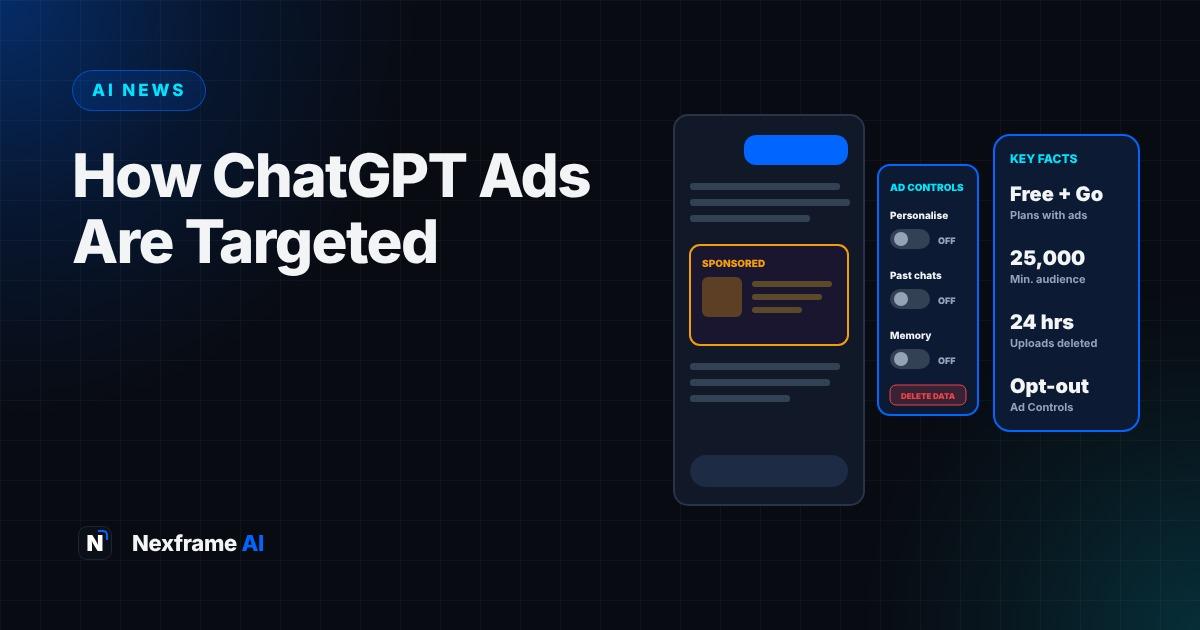
Ads in ChatGPT are becoming more targeted than many users realise. Reporting this week by 404 Media and Gizmodo shows that advertisers can reach ChatGPT users using email addresses and phone numbers they already hold, and that ads can be chosen based on what you type into ChatGPT.
ChatGPT has more than a billion monthly users, so how its ads work affects a lot of people, including the many students, job seekers and small business owners in Nigeria who use the free version every day.
This article explains how ChatGPT ads are targeted, which plans show ads, what OpenAI says it does and doesn't do with your data and the exact settings to change if you want to limit personalised ads.
What happened
OpenAI started showing ads in ChatGPT earlier this year and has been expanding the system since. This month it added visual promotions alongside text ads, and new reporting shed light on how those ads reach people.
On 15 October 2026, 404 Media reporter Joseph Cox explained how advertisers can target ChatGPT users. Cox created his own test ad to see how the system works. The key findings:
Advertisers can upload customer lists. These can include email addresses, phone numbers or a phone's advertising ID. OpenAI checks for matching ChatGPT accounts, and matched users become eligible to see that advertiser's ads.
Your prompts can shape the ads you see. Ads can be chosen based on the conversation you're having.
Gizmodo followed up on 16 October with more detail from OpenAI's own advertiser documentation.
How custom audience targeting works
This feature is similar to tools on Facebook, Instagram and Google, where businesses upload a list of customers and the platform shows ads to the people it can match.
According to OpenAI's documentation, as reported by Gizmodo:
Advertisers can upload raw or hashed email addresses, phone numbers and Android advertising IDs.
Audiences must have at least 25,000 entries, so an advertiser can't build an audience to target one specific person.
Advertisers aren't told who matched, so the tool can't be used to find out whether someone uses ChatGPT.
Being in an audience doesn't guarantee you'll see an ad, OpenAI says.
Uploaded files are deleted within 24 hours of processing.
It's not clear from the documentation whether OpenAI hashes raw contact details when they're uploaded, and Gizmodo said OpenAI didn't respond to its request for more detail before publication.
How your chats affect the ads you see
This is the part that surprises most people. Ads can be selected in two ways based on how you use ChatGPT:
Your current chat. If you ask about laptops, you may see a laptop ad. This happens even if you turn personalisation off.
Your past chats, activity and preferences. If personalisation is on, ChatGPT can use what it has learned about you over time to choose ads. You can switch this off.
OpenAI says ads don't change ChatGPT's answers. The answer you get should be the same whether or not an ad appears beside it. But many people treat ChatGPT like a private notebook, sharing health worries, money problems or job searches. It's worth remembering that what you type can now feed into advertising, at least for the current conversation.
Who sees ads in ChatGPT?
According to OpenAI's ad settings, as reported by TechCity on 17 October:
Free and Go plans see ads.
Plus, Pro, Business, Enterprise and Edu plans don't see ads.
Accounts OpenAI identifies as belonging to users under 18 don't see ads.
Ads are rolling out in selected regions. Personalised ads aren't offered in the European Economic Area or Switzerland for now, because of stricter privacy laws there. OpenAI hasn't published a full list of countries. If you use ChatGPT in Nigeria, check your settings for an "Ad Controls" section; if it's there, ads apply to your account.
How to turn off personalised ads in ChatGPT
You can't remove ads on a free or Go plan, but you can limit how personal they are. Here are the steps, following OpenAI's settings as described by TechCity:
Open ChatGPT and tap your name or profile picture to open Settings.
Tap Ad Controls.
Switch off Personalize ads.
Switch off Past chats and memory for ads.
Tap Delete ads data to clear the ads you've seen and the interests ChatGPT has noted. OpenAI says this can take up to 30 days.
After this, ChatGPT can still show ads based on your current conversation. And because custom audience targeting relies on contact details that businesses already hold, it's not clear that the opt-out stops an advertiser from reaching you through an uploaded list.
Other ways to protect your privacy
Turning off personalisation is a good start. A few habits help further:
Don't share sensitive details you don't need to. Remove full names, phone numbers, account numbers and health details from prompts where you can. Our guide to using AI for health questions safely shows how to ask without oversharing.
Use temporary chats for sensitive topics, so they aren't saved to your history.
Review memory. ChatGPT's memory feature stores facts about you. Check and delete anything you don't want kept. Our list of hidden ChatGPT features most people never use covers where to find these settings.
Be careful with "sponsored" results. Treat an ad in ChatGPT like any other ad: check the business independently before paying, especially for jobs, loans or investment offers.
Consider whether a paid plan is worth it. If you use ChatGPT heavily for work, a paid plan removes ads. Weigh that against the cost; our guide to the hidden costs of free AI tools can help you decide.
What this means for businesses that advertise
If you run a business in Nigeria, ChatGPT ads may become another channel to reach customers, especially if it expands to more countries. A few points to keep in mind:
Customer lists need consent. Uploading customers' emails or phone numbers to any ad platform should follow Nigeria's data protection rules and your own privacy policy. Only use contacts who agreed to marketing.
The minimum audience is 25,000. Small businesses with short customer lists won't be able to use custom audiences on their own.
Results are unproven. ChatGPT ads are new, and advertisers are still learning what works. Test with a small budget before moving money from channels you know.
Our guide to AI for marketing covers practical ways to grow without overspending on new platforms.
Why this matters
Advertising is how most free internet services pay for themselves, and ChatGPT is following the same path as search engines and social networks. The difference is how personal ChatGPT conversations can be. People ask it things they might not type into a search bar or post on social media.
That makes transparency important. OpenAI has put some safeguards in place: minimum audience sizes, file deletion, no ads for under-18s and controls to turn off personalisation. But this week's reporting shows that many users don't know how much of their activity can feed into ads, or that their contact details might be matched from a business's customer list. Checking your settings takes two minutes.
Worked example: tightening your ChatGPT privacy in five minutes
Chioma is a final-year student in Enugu who uses free ChatGPT for coursework, job applications and the occasional personal question. After reading about ad targeting, she spends five minutes on her settings.
She opens Settings and finds Ad Controls. The section is there, so ads apply to her account.
She switches off "Personalize ads" and "Past chats and memory". Ads will now be based only on the chat she's in, not her history.
She taps "Delete ads data". This clears interests ChatGPT has noted about her, which can take up to 30 days.
She reviews memory. She finds saved details about a health issue she once asked about and her home area, and deletes both.
She changes one habit. Before, she pasted her whole CV with her phone number and address into ChatGPT for edits. Now she removes contact details first and asks: "Improve these bullet points for a graduate trainee role" with only the relevant section.
She still sees ads, but they're less personal, and she shares far less than before. For sensitive topics, she uses a temporary chat.
How ChatGPT ads compare with Google and Meta
Custom audiences and context-based ads aren't new. Google shows ads based on your searches, and Facebook and Instagram let businesses upload customer lists. ChatGPT is adopting the same tools.
The differences are in the details. ChatGPT requires at least 25,000 people in an uploaded audience, says it deletes uploaded files within 24 hours and says ads don't change its answers. On the other hand, a ChatGPT conversation often holds far more personal detail than a search query. That's why it's worth knowing the settings and deciding what you're comfortable sharing.
FAQ
Does ChatGPT have ads?
Yes. ChatGPT shows ads to users on the Free and Go plans in selected regions. Plus, Pro, Business, Enterprise and Edu users don't see ads.
Does ChatGPT use my chats to show me ads?
It can. Ads may be based on your current conversation. If personalisation is on, ChatGPT can also use your past chats, activity and preferences. You can switch off the second part in Ad Controls.
How do I turn off ads in ChatGPT?
You can't turn ads off on free or Go plans, but you can turn off personalised ads in Settings, under Ad Controls. Paid plans such as Plus don't show ads.
Can advertisers target me with my email or phone number?
Advertisers can upload lists of emails, phone numbers or advertising IDs, and OpenAI matches them to ChatGPT accounts. Lists must contain at least 25,000 people, and advertisers aren't told who matched.
Do ads change ChatGPT's answers?
OpenAI says no. Ads appear alongside answers and are not supposed to affect what ChatGPT tells you.
Are ChatGPT ads shown in Nigeria?
OpenAI hasn't published a full country list. Check your ChatGPT settings for an "Ad Controls" section to see whether ads apply to your account.
Comments (0)
Sign in to post a comment.
- Be the first to comment.