How to Use AI for Health Questions Safely
Use AI for health questions safely: what chatbots are good for, when to see a doctor, prompts that help, privacy tips and the red flags that need urgent care.
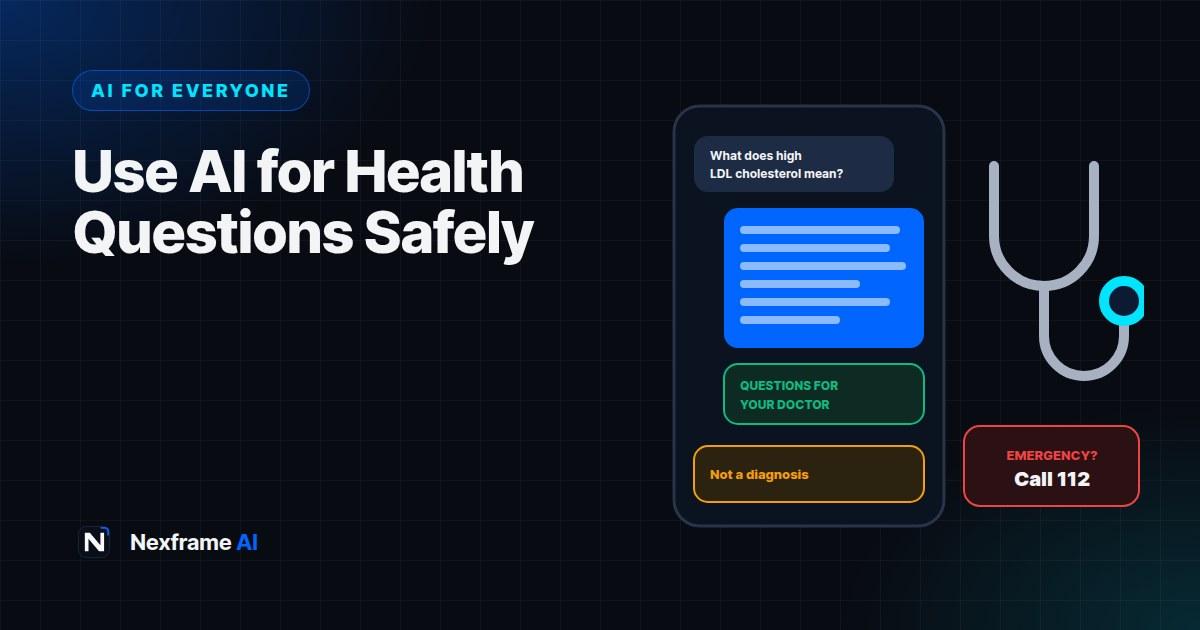
You've had a headache for three days. Your lab results arrived full of abbreviations you don't understand. Your doctor prescribed a new medicine and you forgot to ask what side effects to watch for. Or a relative has just been diagnosed with something you've never heard of.
More and more people now turn to AI chatbots in moments like these, often before they speak to anyone else. AI can be genuinely helpful for understanding health information, preparing questions and making sense of medical language. But it can also be wrong, miss what matters, or give false reassurance when you actually need care.
This guide shows you how to use AI for health questions safely: what it's good for, what it should never replace, prompts that get useful answers, how to protect your privacy and the warning signs that mean you need a health professional now, not a chatbot.
This guide is general information, not medical advice. Always speak to a qualified health professional about your own health.
What AI Is Good For
Used carefully, AI assistants like ChatGPT, Claude and Gemini can help you:
Understand medical terms. Explain words in a diagnosis, discharge letter or lab report in plain language.
Learn about a condition. Get a general overview of a diagnosis, how it's usually treated and what questions to ask.
Prepare for appointments. Organise your symptoms, history and questions so you make the most of a short consultation.
Understand medicines. Learn what a medicine is generally used for, common side effects and general precautions, to discuss with your pharmacist or doctor.
Build healthy habits. Plan meals, exercise routines, sleep habits or reminders, within advice from your health professional.
Navigate the system. Understand what different specialists do, or what to expect from a test or procedure.
In all of these, AI is helping you understand and prepare. Decisions about diagnosis and treatment should still involve a professional who can examine you.
What AI Should Never Replace
A diagnosis. AI can't examine you, run tests or see the full picture. Many conditions share symptoms, and only a professional can tell them apart.
Emergency care. If something might be serious, get help immediately. Don't ask a chatbot first.
Changing or stopping medicines. Never change a dose or stop a prescribed medicine based on AI advice. Talk to your doctor or pharmacist.
Mental health crises. If you or someone you know is in crisis or thinking about self-harm, contact emergency services or a crisis line straight away.
Advice for babies, pregnancy and serious conditions. These need professional care, where small mistakes can have big consequences.
Red Flags That Need Urgent Care
Seek emergency help immediately, rather than asking AI, if you or someone else has:
Chest pain, pressure or tightness
Difficulty breathing
Signs of a stroke: face drooping, arm weakness, slurred speech
Sudden severe headache, confusion or loss of consciousness
Heavy bleeding or a serious injury
Severe allergic reaction, such as swelling of the face or throat
Seizures
High fever with a stiff neck, rash or confusion
Thoughts of suicide or self-harm
In Nigeria, you can call 112 for emergencies, or go straight to the nearest hospital emergency department. Elsewhere, use your local emergency number.
Prompts That Get Useful, Safe Answers
How you ask matters. Give context, ask for explanations rather than diagnoses, and ask the AI to tell you when to seek care.
Understanding a lab result or report
Explain these lab results in plain English for someone with no medical background:
[paste results with names and ID numbers removed]. For each value, say what it measures
and what being high or low generally means. Tell me which results I should ask my doctor
about, and don't diagnose me.
Preparing for an appointment
I'm seeing a doctor about [symptom] that started [when]. Help me organise what to tell
them: a short timeline, what makes it better or worse, other symptoms, medicines I take
and relevant history. Then suggest 5 questions I should ask. Don't guess what it is.
Understanding a medicine
My doctor prescribed [medicine] for [reason]. In plain English, what is it generally used
for, what are common side effects, and which side effects mean I should contact a doctor
quickly? What general questions should I ask my pharmacist?
Learning about a diagnosis
A family member has just been diagnosed with [condition]. Explain in simple terms what it
is, how it's commonly managed, what lifestyle changes usually help, and what questions we
should ask the specialist. Note anything that varies a lot between people.
Notice what these prompts avoid: asking the AI to diagnose you or decide treatment.
How to Check AI Health Answers
AI can sound confident and still be wrong, outdated or missing important context. Protect yourself:
Ask for the reasoning. "Why do you say that?" often reveals weak or generic answers.
Compare with trusted sources. Check against reputable health organisations, hospital websites or official public health bodies.
Watch for overconfidence. Be wary of definite answers about what you have, or about doses.
Remember the local context. Medicine names, availability, guidelines and common illnesses differ by country. For example, malaria and typhoid are common considerations in Nigeria that general AI answers may underplay or overplay.
Bring it to a professional. The safest use of an AI answer is as a list of questions for your doctor or pharmacist.
Protect Your Health Privacy
Health information is among the most sensitive data you have.
Remove identifying details like your full name, hospital number, date of birth and address before pasting reports into a chatbot.
Check privacy settings in your AI tools, including whether chats are used to train models and whether you can delete history. Our guide to hidden ChatGPT features covers options like temporary chats.
Be careful with health apps that ask for lots of personal data. Read what they do with it.
Don't share other people's health details without their permission.
Beware of Health Scams and Misinformation
AI-generated content has made health misinformation easier to spread. Be cautious of:
"Miracle cure" adverts, especially with videos of doctors or celebrities who may be AI-generated. Our guide to telling if an image or video is AI-generated shows how to check.
Products claiming to cure serious diseases like diabetes, hypertension or cancer.
Messages urging you to stop prescribed treatment.
Health advice in forwarded WhatsApp messages with no clear, trusted source.
If a health claim sounds too good to be true, check it with a professional before acting.
A Worked Example: Understanding a Blood Test
Tope receives his full blood count and lipid profile results by email before his follow-up appointment, which is a week away. Several values are marked high.
Privacy first: He removes his name, hospital number and date of birth before pasting the results into an AI assistant.
Prompt: He asks the AI to explain each value in plain English, say what high or low generally means, and list what to ask his doctor, without diagnosing him.
What he learns: His cholesterol is above the usual range, and the AI explains in general terms what that can mean and what lifestyle factors affect it. It suggests questions, such as whether he needs a repeat test and what targets apply to him.
What he doesn't do: Start or stop any medicine, or decide he has a particular condition.
At the appointment: He arrives with a short list of questions. The doctor explains his results in context and agrees a plan. The consultation is more useful because he understood the basics beforehand.
Using AI for Healthy Habits
AI can be a helpful coach for everyday wellbeing, within limits:
Meal planning. "Suggest a week of affordable, balanced Nigerian meals for a family of four, with simple recipes." If you have a medical condition, follow your doctor's or dietitian's advice first.
Exercise. "Create a gentle 20-minute home exercise routine for a beginner with no equipment." Check with a professional if you have health conditions or haven't exercised in a long time.
Sleep and stress. Ask for practical sleep habits or simple relaxation techniques.
Reminders and routines. Use AI to plan medicine reminders or appointment schedules alongside your phone's alarms and calendar. Our guide to planning your week with AI can help you build routines that stick.
Common Mistakes to Avoid
Using AI instead of emergency care. If it might be serious, get help first.
Asking AI to diagnose you. Ask it to explain and help you prepare instead.
Changing medicines based on AI. Always speak to your doctor or pharmacist first.
Pasting full medical records with your details. Remove identifying information.
Trusting confident answers. Confidence isn't accuracy. Check important information.
Ignoring the local context. Guidelines and common illnesses vary by country.
Questions to Ask Your Doctor or Pharmacist
AI is especially useful for preparing questions. Here are good ones to bring to an appointment, which you can ask AI to tailor to your situation:
What is causing my symptoms, and what else could it be?
What do my test results mean for me specifically?
What are my treatment options, and what are the benefits and risks of each?
How should I take this medicine, and for how long?
What side effects should make me call you or go to hospital?
Are there foods, drinks or other medicines I should avoid?
What can I do at home to help?
When should I come back, and what would make you want to see me sooner?
Write the answers down, or ask if you can record the explanation. Afterwards, AI can help you turn your notes into a simple plan or a medicine schedule, which you can then confirm with your pharmacist.
Helping Care for a Relative
Many people use AI to help care for elderly parents or relatives with long-term conditions. It can be genuinely useful here, with care.
Understanding the condition. Ask AI to explain a relative's diagnosis in simple terms, so the whole family understands what to expect.
Organising care. Use AI to build a simple schedule for medicines, appointments and check-ups, shared with family members who help.
Explaining in their language. If a relative is more comfortable in Yoruba, Igbo, Hausa or Pidgin, AI can help draft explanations, but have a fluent speaker check them, especially for medical instructions. Our guide to using AI in Nigerian languages explains how.
Preparing for difficult conversations. AI can suggest gentle ways to discuss sensitive topics with a relative or their doctor.
Always respect your relative's privacy and wishes, and make sure their care decisions are made with their health professionals.
Final Thoughts
AI for health questions can make medical information less confusing and help you get more from appointments. Used well, it turns worry and jargon into understanding and good questions.
The golden rules are simple: use AI to understand and prepare, not to diagnose or treat; protect your privacy; check important answers; and never let a chatbot delay urgent care.
For more ways to use AI safely in daily life, see our guides to AI voice cloning scams and budgeting with AI, and browse all our AI for Everyone guides.
Frequently Asked Questions
Can ChatGPT diagnose me?
No. AI chatbots can't examine you or run tests, and they can be wrong. Use them to understand information and prepare questions, and see a qualified health professional for diagnosis.
Is it safe to ask AI about my symptoms?
It can help you organise your symptoms and questions, but don't rely on it to decide whether something is serious. If you have red-flag symptoms, seek urgent care immediately.
Can AI explain my lab results?
Yes, in general terms. Remove identifying details first, ask for plain-English explanations and take your questions to your doctor, who can interpret results in context.
Should I use AI to check medicine side effects?
It can explain common side effects and when to seek help, but always confirm with your doctor or pharmacist, and never change or stop a medicine based on AI advice.
Is my health information safe with AI chatbots?
It depends on the tool and your settings. Remove identifying details, check privacy settings and avoid sharing sensitive information you don't need to.
What's the emergency number in Nigeria?
You can call 112 for emergencies in Nigeria, or go straight to the nearest hospital emergency department.
Can AI help with mental health?
AI can share general wellbeing tips, but it isn't a substitute for professional support. If you or someone you know is in crisis, contact emergency services or a crisis line immediately.
How do I know if health advice online is fake?
Check the source, look for reputable health organisations, be wary of miracle cures and AI-generated doctor videos, and confirm with a professional before acting.
Comments (0)
Sign in to post a comment.
- Be the first to comment.